Thursday, May 30, 2024

New 0FAC Regs for Private Business and US Advocacy Responses

Office of Foreign Assets Control


Publication of Amended Cuban Assets Control Regulations (CACR) and Related Frequently Asked Questions


The Department of the Treasury’s Office of Foreign Assets Control (OFAC) is amending the Cuban Assets Control Regulations, 31 C.F.R. Part 515 (CACR) to further implement portions of the President’s foreign policy toward Cuba. Among other things, these amendments increase support for internet freedom for the Cuban people and independent Cuban private sector entrepreneurs by expanding authorizations for internet-based services and a range of financial transactions. The rule will be published in the Federal Register on Wednesday, May 29, 2024.

OFAC is also issuing six new, Cuba-related Frequently Asked Questions (FAQs 1174-1179) and amending eight Cuba-related Frequently Asked Questions (FAQs 732, 736, 745, 748, 757, 769, 770, and 785).

Please visit this link for more information on today's update.

OFAC Final Rule  https://static1.squarespace.com/static/563a4585e4b00d0211e8dd7e/t/6655dde4739fac76d73e2a97/1716903396355/2024-11618.pdf


See below for key OFAC Frequently Asked Questions

https://www.washingtonpost.com/national-security/2024/05/28/us-cuba-sanctions-biden-trump/

***************

CENTER FOR ENGAGEMENT AND ADVOCACY IN THE AMERICAS APPLAUDS NEW REGULATIONS SUPPORTING CUBAN ENTREPRENEURS AND MODERNIZING U.S. CUBA POLICY

Washington, DC, May 28, 2024 - The Center for Engagement and Advocacy in the Americas (CEDA) welcomes today’s regulatory changes announced by the U.S. Department of the Treasury's Office of Foreign Assets Control (OFAC) aimed at bolstering support for Cuban entrepreneurs and modernizing U.S. policy towards Cuba.

Today's announcement represents a significant step forward in empowering the Cuban people and fostering constructive engagement between the United States and Cuba. By expanding access to internet-based services, facilitating financial transactions, and supporting independent entrepreneurship, these regulations signal a positive shift away from outdated Cold War-era policies towards a more logic-driven and people-centered approach.

"These updates are significant. We applaud the Biden administration's decision to listen to the voices of Cuban entrepreneurs and civil society and take meaningful steps to support their aspirations for a brighter future," said María José Espinosa, the Executive Director of CEDA. "For so long, outdated US trade regulations have made the lives of Cuban entrepreneurs markedly more difficult than they already are, as they endure restrictive regulations from both the U.S. and Cuban governments. Under these new regulations, Cuban entrepreneurs can process payments, hold a US bank account, and receive “U-turn” funds. This will have a positive impact on the Cuban private sector, which is in dire need of support.”

CEDA emphasizes the importance of heeding the recommendations of Cuban entrepreneurs and civil society actors in shaping U.S. policy towards Cuba. In July 2023, CEDA led a delegation of Cuban entrepreneurs to meet with policymakers in Washington. The entrepreneurs shared their recommendations on updating US trade policy, many of which are reflected in today’s amendments.

"These regulatory changes reflect a growing recognition that U.S. policy towards Cuba must prioritize engagement with the people, civil society organizations, and private businesses in Cuba," added Espinosa. "It is high time for the U.S. government to take actions that reflect its aims of supporting the Cuban people. If increased economic freedom is an objective, the US must end all unnecessary restrictions on Cuban private businesses.”

CEDA calls on the Biden administration to build upon these positive steps by further easing restrictions on travel, trade, and financial transactions with the Cuban people, removing Cuba from the State Sponsors of Terrorism list, and by working towards the normalization of diplomatic relations between our two countries.

Stay tuned for an upcoming webinar with U.S. and Cuban experts to dive deeper into the updated regulations and their potential impacts.

For media inquiries, please contact Isabel Albee at isabel@weareceda.org

https://www.weareceda.org/en/press-releases/center-for-engagement-and-advocacy-in-the-americas-applauds-new-regulations-supporting-cuban-entrepreneurs-and-modernizing-us-cuba-policy

**************

U.S.-Cuba Trade and Economic Council  Eye on Cuba

Biden-Harris Administration Issues OFAC Regulations To Help Cuba's "Entrepreneurs" But Again Fails To Make The Most Important Change.

May 28, 2024
While useful for the Biden-Harris Administration (2021- ) to redefine the word "entrepreneur" and to further expand Internet-related activities for entrepreneurs, and to permit entrepreneurs to possibly have a less complex banking transaction process outside of United States, and to authorize entrepreneurs to have bank accounts in the United States, there remains one glaring omission- the continuing prohibition upon direct correspondent banking.

As long as financing, investment, and payments need to be routed through third countries, the Biden-Harris Administration will be constraining precisely the activity it professes to support.

LINK: 10 May 2024 Marked Two-Year Anniversary Since OFAC Issued First License To Authorize Investment And Financing Into A Private Company In Cuba. Funding Waits Because Havana Has Yet To Issue Regulations May 13, 2024


https://www.cubatrade.org/blog/2024/5/28/miow5axraqxay6msl8uk83t6lg2lar

(Includes full text of White House background briefing)


**********************************tes, s Rele

May 28, 2024 News & Updates, Press Releases

ACERE Celebrates New Regulations In

 Support Of Cuban Entrepreneurs

The measures revealed today allow independent Cuban entrepreneurs to legally open and operate U.S. bank accounts from Cuba; access U.S. internet-based services, software and payment platforms; and benefit from the reauthorization of U-turn transactions, or Cuba-bound remittances and other forms of payment that originate in a third country and pass through the U.S. financial system. By amending existing Treasury Department rules, today’s announcement updates the definition of “self-employed individual” to reflect the growing diversity of the Cuban private sector, and allows for new classes of exports to the U.S. by Cuban private businesses, such as software and mobile applications .

Demands for these changes, among many others, were included in a letter sent by thousands of Cuban private business owners to the Biden administration last year encouraging bold action to support their expansion and facilitate their access to capital, banking and internet-based services. This initiative built off of earlier efforts from Cuban entrepreneurs — later taken up by their Cuban-American friends and family — urging sanctions relief and U.S. support for this growing sector of the Cuban economy.

In light of today’s announcement and the administration’s recent removal of Cuba from the list of countries not cooperating with counter-terrorism efforts, ACERE reiterates its call for the administration to lift Cuba’s designation as a state sponsor of terrorism, resume regular processing of nonimmigrant visas at the U.S. Embassy in Havana, and remove other travel and trade-related restrictions imposed under the Trump administration that serve to undermine the growth of Cuba’s private sector.

Without removing Cuba from the SSOT list, U.S. and foreign financial institutions will continue to face onerous due diligence requirements in implementing these regulatory changes to the extent that the Biden administration hopes. Ending the SSOT designation is necessary to remove barriers, real and perceived, that third-country banks and financial institutions face in providing services to Cuba’s independent entrepreneurs. Cuba’s rescission from the list is also vital to encourage the resumption of European tourism to Cuba, which particularly benefits Cuba’s private AirBnb hosts, restaurateurs, taxi drivers, agricultural producers, cultural workers and others. 

Resuming nonimmigrant visa processing in Havana would help facilitate Cuban entrepreneurs’ travel to the United States for business activities and the marketing of their goods and services, as well as their acquisition of essential U.S. products for use and sale in their businesses on the island.

Furthermore, ACERE encourages the Biden administration to issue a general license authorizing U.S. individuals and companies to invest in and provide other modes of financing for Cuba’s independent private entrepreneurs, as well as explore ways to allow two-way direct correspondent banking between U.S. and Cuban financial entities.

While ACERE expresses concern that these measures took two years to implement after having been announced in May 2022—reportedly over pressure from members of Florida’s congressional delegation—today’s announcement shows that the Biden administration can and should pursue a foreign policy toward Cuba that not only bolsters the operations and market share of U.S. businesses and service providers on the island, but also supports the Cuban people and civil society by removing obsolete, U.S.-imposed restrictions.

**********************

Contact: Ricardo Herrero

Phone: 202-709-8191

CUBA STUDY GROUP APPLAUDS BIDEN MEASURES TO SUPPORT THE CUBAN PRIVATE SECTOR AND EXPAND INTERNET ACCESS IN CUBA

May 29, 2024

WASHINGTON D.C.  The Cuba Study Group applauds the Biden-Harris aadministration’s new regulations facilitating greater U.S. support for the Cuban private sector and expanded internet access on the island. These announcements represent the culmination of pledges made by President Biden in May of 2022. 

Amid the island’s worst economic crisis in thirty years, independent Cuban entrepreneurs have been filling the void left by state enterprises increasingly unable to provide basic goods and services to their citizens. Against many odds, they are establishing distribution, production, and supply chains that put food on Cuban tables. The measures announced yesterday which include authorizing independent Cuban entrepreneeurs to open accounts in U.S. banks and better access cloud-based internet services will propel greater integration with U.S. markets for soourcing resources, supplies and new customers. By reducing transaction costs and increasing competition, they will also hopefully help the Cuban private sector make a greater array of goods available to the Cuban population at lower prices.

At the same time, we wish these measures had come sooner. In the two years since the Biden-Harris administration announced its intention to support the Cuban private sector, Cuba’s economic crisis has worsened significantly. Out-migration, mostly toward the United States, has been record-shattering. To be clear, slow and insufficient domestic reforms by Cuban authorities to generate investment and productive economic activity are primary drivers of the decline. But U.S. inaction and codified sanctions have only compounded suffering on the ground. In the many months this package was held up to facilitate congressional dealmaking on other White House priorities, the United States missed an opportunity to provide concrete support to the Cuban people at their greatest time of need in recent memory, and to those entrepreneurial change-makers that represent one of the few bright spots in Cuba today.

Thus, the Biden-Harris administration’s actions should not stop here. We call on the President to follow up yesterday’s measures with broad authorizations for direct correspondent banking and U.S. investment in Cuba’s private sector. Both are key forms of support that Cuban entrepreneurs have demanded and need to thrive. As U.S. geopolitical rivals seek to shape their own vision of economic reforms in Cuba, such efforts could not come at a more opportune moment. 

Just as importantly, we call on the Cuban government to urgently modify its own laws and regulations to formally allow private small- and medium-sized enterprises to accept foreign direct investment and financing. A stronger, more consistent commitment to economic and political liberalization is necessary if the Cuban economy is to ever find a sustainable path to recovery. 
 
###


The Cuba Study Group is a non-profit, non-partisan organization, comprised of business and professional leaders with a deeply rooted love for Cuba and the Cuban people. We aim to put our collective experience in leadership skills, problem solving, and wealth creation at the service of the Cuban people. We aim to facilitate change, help empower individuals and promote civil society development.


************************


John McAuliff
917-859-9025


Fund for Reconciliation and Development 

Cuba/US People to People Partnership


The Biden Administration Undoes Part of
Trump Legacy on Cuba

More Needed from Both Countries


May 30, 2024 -- The new OFAC regulations are important positive steps to undo Trumpism
, especially permission given to Cubans and their private businesses to open bank accounts in the US and to manage them on line.  

However, a missing essential element is provision for direct correspondent banking.  This is an essential factor for serious transactions that need to avoid the additional costs and delays imposed by banking through third countries.

There are several other overdue steps to undo Trump that are necessary to rebuild the Biden Administration's international and regional credibility. 
1) Remove Cuba's irrational designation as a State Sponsor of Terrorism (SSOT).  In addition to crippling access to international finance, SSOT means travelers to Cuba lose the ESTE visa waiver for US entry for ten years. 

2)  Remove restrictions on purposeful travel, including the ban on hotel use and cruises from the US as well as general licenses for cultural performances and independent visits. 

3)  Suspend, as had always been the case, use of Title 3 of the Helms Burton law to end nuisance suits by Cuban Americans. 

4)  Permit purchase of rum and cigars as souvenirs. 

5)  End propaganda attacks on Cuba's international medical teams, its version of the Peace Corps.  USAID head Samantha Power said it best when she was Obama's ambassador to the UN   https://cubapeopletopeople.blogspot.com/2021/05/ambassador-samantha-powers-address-to.html 
For its part Cuba can overcome Trumpism by healing the wounds of protests and releasing prisoners motivated by the economic consequences of his extreme pressure campaign.  Economic development will be encouraged by enabling US investment and financing of private businesses, phasing out ACOPIO's bureaucratic control of the agricultural system, and extending the private sector to travel guides and agencies.  

In his second term, President Biden needs to address the unfinished business of ending the universally rejected embargo and the return of the Guantanamo base to Cuban sovereignty. 

Ironically those steps would do more than anything else to open the door to economic and political change and a positive role with potential return for recent emigres.  Viet Nam and Cuba have similar one party systems but twenty nine years after normalizing relations with the former we enjoy a comprehensive strategic partnership.  Why can't we work toward the same mutual respect with Cuba?  

We need to pay more attention to the positive history of Cuba and the US, including the link between Irish and Cuban nationalism in 19th century NY tinyurl.com/VarelaUS

*************************

Expectations, hopes and uncertainty: reactions to U.S. announcements for entrepreneurs 


************************************

Key  OFAC  FAQ

emphasis mine

732. What types of remittances are allowed to be made by persons subject to U.S. jurisdiction to persons in Cuba?  What are the applicable conditions and requirements?

Answer

OFAC currently authorizes a number of categories of remittances from persons subject to U.S. jurisdiction to persons in Cuba pursuant to 31 CFR § 515.570.  Section 515.570 excludes from the scope of the authorization any transaction relating to the collection, forwarding, or receipt of remittances involving any entity or subentity identified on the State Department’s Cuba Restricted List.  Authorized remittance categories include: 

Family remittances:  Persons subject to the jurisdiction of the United States who are 18 years of age or older are authorized to make remittances to nationals of Cuba who are close relatives, as defined in § 515.339, of the remitter, provided that the recipient is not a prohibited official of the Government of Cuba, a prohibited member of the Cuban Communist Party, or a close relative of a prohibited official of the Government of Cuba or prohibited member of the Cuban Communist Party, and provided that the remittances are not made for emigration purposes.  See §§ 515.337, 515.338, and 515.339 for relevant definitions.  

Donative remittances:  Effective June 9, 2022, OFAC amended § 515.570(b) to authorize donative remittances to Cuban nationals who are not prohibited officials of the Government of Cuba, prohibited members of the Cuban Communist Party, or close relatives of a prohibited official of the Government of Cuba or prohibited member of the Cuban Communist Party.  

Remittances to certain individuals and independent non-governmental organizations in Cuba:  Persons subject to the jurisdiction of the United States are authorized to make remittances to certain individuals and independent non-governmental organizations in Cuba, including remittances that encourage the development of private businesses and operation of economic activity in the non-state sector by independent private sector entrepreneurs.  Please see FAQ 1179 for more information on the definition of an independent private sector entrepreneur. This general license also authorizes persons subject to U.S. jurisdiction to make remittances to pro-democracy groups and civil society groups in Cuba, and to members of such groups or organizations, to support:  humanitarian projects in or related to Cuba that are designed to directly benefit the Cuban people and to support the Cuban people through activities of recognized human rights organizations, independent organizations designed to promote a rapid, peaceful transition to democracy, and activities of individuals and non-governmental organizations that promote independent activity intended to strengthen civil society.  See § 515.570(g) for additional applicable conditions.

Remittances to religious organizations in Cuba:  Persons subject to the jurisdiction of the United States are authorized to make remittances to religious organizations in Cuba in support of religious activities, provided that the remittances are not made from a blocked source and that the remitter, if an individual, is 18 years of age or older.  See § 515.570(c).

Remittances to students in Cuba pursuant to an educational license:  Persons subject to the jurisdiction of the United States who are 18 years of age or older are authorized to make remittances to close relatives, as defined in § 515.339, who are students in Cuba pursuant to the general license authorizing certain educational activities in § 515.565(a) or a specific license issued pursuant to § 515.565(f), provided that the remittances are not made from a blocked source and are for the purpose of funding transactions authorized by the general licenses in § 515.565(a) or the specific license issued pursuant to § 515.565(f) under which the student is traveling.  See § 515.570(d).

Two one-time $1,000 emigration-related remittances:  Persons subject to the jurisdiction of the United States are authorized to remit the following amounts, subject to certain conditions:  (1) Up to $1,000 per payee on a one-time basis to Cuban nationals for the purpose of covering the payees' preliminary expenses associated with emigrating from Cuba to the United States; and (2) up to an additional $1,000 per payee on a one-time basis to Cuban nationals for the purpose of enabling the payees to emigrate from Cuba to the United States, including for the purchase of airline tickets and payment of exit or third-country visa fees or other travel-related fees.  See § 515.570(e). 

Unblocking and return of blocked remittances:  Effective June 9, 2022, OFAC added a general license in § 515.570(h) authorizing the unblocking and return of blocked remittances, provided they would be authorized under revised § 515.570(a) or (b).

See § 515.570 for a complete description of what the OFAC general licenses related to remittances authorize and the restrictions that apply, as well as statements of specific licensing policy.

For remittances from Cuban nationals to persons subject to U.S. jurisdiction, see § 515.587. 

Updated: May 28, 2024

Date Released
October 26, 2020

748. May U.S. banks open and operate accounts for Cuban nationals present in Cuba?

Answer

Yes.  Section 515.584(h)(1) of the CACR contains a general license that allows banking institutions to open and maintain bank accounts in the United States solely in the name of a Cuban national located in Cuba, to receive payments in the United States for transactions authorized pursuant to, or exempt from the prohibitions of, the CACR and to remit such payments back to Cuba, including through an online payment platform.  For example, an author who is a Cuban national located in Cuba may open an account with a bank in the United States to receive payments for sales of their book.  Additionally, pursuant to 31 CFR § 515.584(h)(2), a U.S. banking institution may open and maintain an account solely in the name of a Cuban national who is an independent private sector entrepreneur (as defined in 31 CFR § 515.340) for the purpose of conducting authorized or exempt transactions (e.g., receipt of payment for the importation to the United States of certain goods and services produced by independent Cuban entrepreneurs pursuant to 31 CFR § 515.582 or payment related to authorized exports to Cuba under 31 CFR § 515.533), including through an online payment platform.  Pursuant to this authorization, independent private sector entrepreneurs — whether located in the United States, Cuba, or another country — can open and remotely access their account at a U.S. banking institution and conduct remote transfers, including to Cuba, as long as the underlying transaction is authorized or exempt.  For a complete description of what this general license authorizes and the restrictions that apply, see 31 CFR § 515.584(h)(2).

Updated: May 28, 2024

770. What types of goods and services produced by independent private sector entrepreneurs are authorized for importation into the United States from Cuba pursuant to 31 CFR § 515.582?

Answer

Pursuant to 31 CFR § 515.582, certain goods and services produced by independent private sector entrepreneurs, as defined in 31 CFR § 515.340, and as set forth in a list maintained by the State Department on its website, are authorized for importation.  Persons subject to U.S. jurisdiction may engage in associated transactions necessary to import these authorized goods and services.  The State Department Section 515.582 list provides details of the goods and services authorized for importation into the United States from Cuba pursuant to this provision.  This list references sections and chapters of the Harmonized Tariff Schedule (HTS) of the United States to indicate categories of goods that are not eligible for importation into the United States pursuant to 31 CFR § 515.582, even if such goods were produced by independent private sector entrepreneurs; any other goods produced by independent private sector entrepreneurs and not covered by the listed sections and chapters of the HTS may be imported, as provided in the State Department’s Section 515.582 list and subject to compliance with all other relevant requirements under state and federal law and regulations.  Imports authorized by 31 CFR § 515.582 are not subject to the limitations set forth in 31 CFR § 515.560(c) or 31 CFR § 515.544, including the $100 limitation on imported merchandise from Cuba or Cuban-origin merchandise from a third country intended as gifts.  For additional information, please see FAQ 1178.

Updated: May 28, 2024

Section 515.582 of the CACR authorizes persons subject to U.S. jurisdiction to import certain goods and services produced by independent private sector entrepreneurs, as determined by the State Department and set forth on the State Department's Section 515.582 List.  See FAQ 770.

In determining whether a good is produced by an independent private sector entrepreneur, as defined in 31 CFR § 515.340, persons subject to U.S. jurisdiction should consider the extent of Cuban state-owned entities’ involvement in the production and exportation of such goods.  For example, goods generally are not considered produced by independent private sector entrepreneurs if the manufacturing or processing conducted by Cuban state-owned entities results in a product with a new name, character, or use.  For example, an agricultural commodity grown by an independent grower but then processed by Cuban state-owned entities into a new product prior to exportation would not be a good produced by an independent private sector entrepreneur for purposes of 31 CFR § 515.582.  However, a good can still be considered produced by an independent private sector entrepreneur if, for example, Cuban state-owned entities are involved only in packing of the final product or acting solely as an export agent. 

Released on 


Section 515.340 defines the term “independent private sector entrepreneur” to mean a Cuban national who is not a prohibited official of the Government of Cuba or a prohibited member of the Cuban Communist Party, and who is one or more of the following:  (a) an owner, including a self-employed individual (cuentapropista), or employee of a small private business entity, private cooperative, or a sole proprietorship located in Cuba, in each case of up to 100 employees; (b) an independent contractor or consultant; (c) a small farmer who owns his or her own land; (d) a small usufruct farmer who cultivates state-owned land to sell products on the open market; or (e) a private cooperative or small private business entity located in Cuba of up to 100 employees that is owned only by individuals described in paragraphs (a) through (d) of § 515.340.  For example, small private business entities or private cooperatives owned only by independent private sector entrepreneurs, as defined, could include:

  • Agricultural businesses and farming cooperatives;
  • Animal feed and veterinary services;
  • IT services, software development businesses, and mobile application developers
  • Food and beverage importers, production/processing businesses, packaging and food distributors;
  • Clothing, jewelry, fashion design, and beauty/cosmetics suppliers and services;
  • Historic preservation and cultural preservation businesses;
  • Arts-related businesses; 
  • Machinery manufacturing and repair businesses;
  • Shipping, logistics, expediting, and delivery of goods businesses;
  • Medical supply businesses;
  • Restaurants and bars;
  • Taxis and transportation services;
  • Bed and breakfasts;
  • Manufacturing companies;
  • Business consulting services, marketing and branding services;
  • Accounting and bookkeeping services;
  • Home construction business and remodeling, plumbing, electrical, or other repair companies for business or residential facilities and homes;
  • Furniture design and manufacturing companies;
  • Travel services;
  • Vendors of personal care and household items, furniture, and appliances;
  • Interior decoration and design businesses;
  • Film and media production or journalism businesses;
  • Gyms, personal training, or fitness classes; and
  • Mechanical services (automobile, refrigeration, heating and A/C services and repair).
Released on 


Monday, May 6, 2024

Rafael Hernandez: The Beginning of the Conflict

In a jungle of prejudices: Fidel and the Americans

The Revolution has triumphed 109 days ago, and he has been in the United States for five, where he has arrived as a guest of the Newspaper Publishers Association.

It is difficult for me to speak here in the middle of a forest of prejudices. I can speak here about a real revolution that is taking place near your country. Our revolution was made without hate of class. There was never a division from one class to another. Our revolution is a revolution for social justice, for the poor people, and of course, too, for the middle class. 1

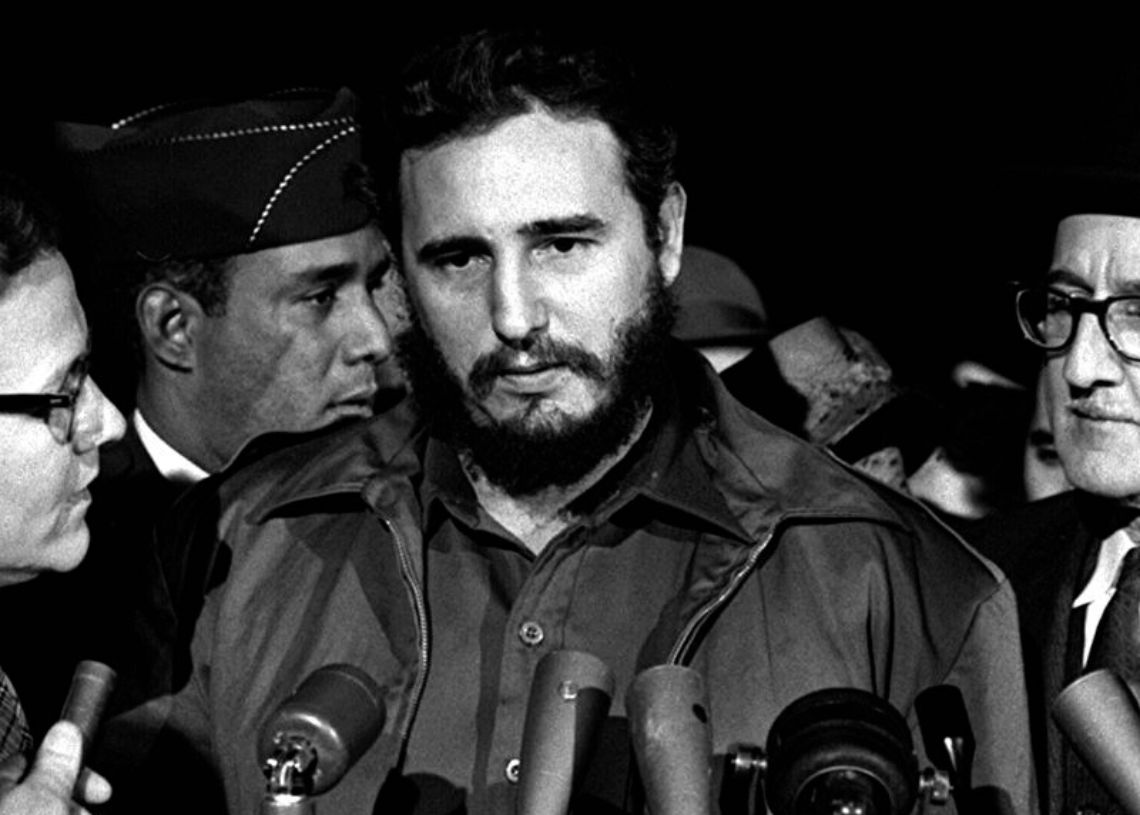
This is Fidel Castro, 65 years ago, speaking in English to students at Princeton University. The Revolution has triumphed for 109 days, and he has been in the United States for five, where he has arrived as a guest of the Newspaper Publishers Association. Although on a “private” visit, he has spoken repeatedly in front of the big press, on high- rated television programs, and has even met with the Secretary of State, with senators and representatives of the foreign committees of Congress, and with Vice President Nixon himself. The photo of him waving to the crowd in Washington is on the front page everywhere. He is not yet 33 years old.

Before leaving Havana, Ambassador Bonsal made all kinds of recommendations on how to make the most of the trip. The diplomat, for whom Cuban politics is a crossword puzzle, believes that the trip will be the return trip, and it annoys him that the journalists have taken the lead over the Eisenhower Administration. He knows, by the way, that the general president was reluctant to invite him, waiting for Fidel and Cuba to enter through the ring. Instead, the guerrillas have slipped through the half-open door of the press, since closing it would have been a hassle (Eisenhower discreetly asked if they couldn't "deny him a visa").

The plan is dizzying, of course, like everything back then, but not so improvised. The Government's economic team, made up of top professionals, has prepared to talk with its counterparts from the North. The National Bank has sent a memo to the other side proposing an agenda on cooperation and financial assistance. And Minrex (the chancellor is not yet Roa, who served as ambassador to the OAS) has even hired a well-known American public relations company to advise the visit.   

For some notable historians this was the best opportunity to have avoided the breakdown of relations and the spiral of conflict that surrounded it. I'm not saying no. Reviewing it retrospectively is like going back over the history of what could have been, a path of lost opportunities, options, gestures that stayed there. However, it allows us to appreciate how many negative reactions, vested interests, prejudices, underestimations, arrogance, the young revolution and its top leader had already aroused in the toxic climate of the Cold War. 

In fact, if you look carefully at everything that was happening in that political theater, with the benefit of time and declassified papers, the chronicle of a death foretold was already underway, the collision course between the United States and the Revolution. This was true despite the fact that that expedition was hopeful for many, including Fidel himself. 

The first act of the Revolution in power had been to install the revolutionary courts, to prosecute the criminals of the dictatorship. The popularity of those processes inside contrasted with the commotion they raised outside. Instead of taking justice into their own hands, as 25 years earlier, when Machado fell, this time the trials applied the law as punishment for the repression. In January 1959, the independent Cuban press spoke of 20,000 deaths. Beyond the number of victims, the 81 months of Batistato represented a much greater cumulative effect: that of a historical hangover in which impunity had prevailed, from the time of Weyler until the last dictatorship. In the Cuba of 1959 there were living witnesses to all these pending cases. This time they were going to judge them. 

Paradoxically, the first point of friction between the United States and the young Revolution had not been the agrarian reform or the nationalizations, but rather the punishment of human rights violators and its extreme transparency, which reached the point of letting in the Cuban and foreign press to the executions. Although his external image turned out to be counterproductive. Let's say, the sequence of the execution of Colonel Cornelio Rojas, police chief of Santa Clara, guilty of countless murders and torture that terrorized the city, presented an unarmed old man, dressed in civilian clothes, whose hat flew through the air under the impact of the bullets. With this bad image circulating around the world, what would not be the surprise of the Christian Science Monitor's envoys when they heard Cubans on the street who, instead of protesting the expeditious action of the courts, asked them: "Is it already Did you see how exemplary Cuban justice is?”

It is not surprising that, when those newspaper editors, fascinated with the exotic image of Fidel and the bearded men, took the initiative to see him up close, they offered him the golden opportunity, above any other economic or diplomatic interest, to convey to the people in the US, live and direct, their version of what was happening in Cuba. That was the priority. So no more asking for help or financing, he told his perplexed economists, this is going to be a visit of good will, to tell our truth. And so the delegation of 40 Cubans left, on April 15, 1959.

I am not going to review a journey that had multitudinous moments and diverse meetings, not only in the field of politics and the media, but also in civil society, with the great universities of New England—Princeton, Columbia, Harvard—and that included everything type of adventures, night walks, late-night Chinese restaurants, Latin newspapers, shaking hands with Cuban emigrants and high school students, lunches at the Foreign Correspondents' Club, visits to the Sugar Exchange and the tiger cage at the Bronx Zoo , as well as other common or unusual places, within and especially outside of plan, days typical of that first and unrepeatable time.

With his talent as a means of communication, which Cubans already knew, and his ability to charm his audiences, without reading a piece of paper and in his imperfect English, although politically very effective, Fidel also exposed himself, especially in his meetings with journalists and politicians, who subjected him to identical interrogations about the same three topics: the trials, the communist presence, the prospect of elections. This was the case, especially in the two longest and most dense sessions of his journey, with Richard Nixon and with a senior CIA officer who was an expert in the fight against communism. 

Twelve years later, in his memoirs, Ambassador Bonsal refers to the objective of Nixon's meeting with Fidel in the following terms: “to underline the dangers to which the machinations of international communism could expose the naive leader of a popular revolution.” 

Indeed, after two and a half hours of pedagogical talk, Nixon felt that Fidel's attitude toward the virtues of capital, elections, and the danger of communism was contradictory to that of the U.S. However, he did not believe that Fidel was a communist, but rather “incredibly naive about the communist threat.” Above all, although he was an adversary, he saw him as endowed with the qualities of a leader. “No matter what we think of him, he is going to be a big factor in the development of Cuba and quite possibly in Latin American affairs in general… we have no choice but to try to steer him in the right direction.”

This same paternalistic and visionary Nixon would change his mind regarding the Revolution and Fidel in a very short time: instead of leading them on the right path, he began to advocate the use of force to liquidate them.

The senior CIA officer repeated the same class to him, for three hours. While he smoked cigars that Fidel gave him, he explained to him the threat that the PSP posed to his leadership. The commander responded that the communists were few, and that the US exaggerated its threat in Latin America, since the little attention that the US paid to the economic and social problems of the region had a worse effect. In any case, the officer appreciated that Fidel had listened “carefully and in good faith” to his warnings, and had been willing to “continue receiving recommendations on international communism in the future.” In fact, he told the president of the National Bank that “Not only is Fidel not a communist, but he is a strong anti-communist fighter.”

The State Department's assessment of that visit was that it had been a triumph for Cuba in terms of public relations (contrary to what Bonsal thought), but that it was not going to "alter the essentially radical course of its revolution...". For them, despite having seen him speak for so many hours and with such dissimilar interlocutors, Fidel remained “an enigma.” 

Nor did US policy towards Cuba change after that visit in favor of a more realistic and negotiating approach, but on the contrary. The USSR did not begin to define its policy towards Cuba until almost a year later, because the CPSU did not fully understand what was happening on the island. When a high-level Soviet delegation visited the island for the first time, in March 1960, the CIA had been carrying out its assassination plans for five months and Playa Girón had progressed from infiltration to invasion. That officer who spoke with Fidel, Gerry Droller, better known in the world of covert operations as Frank Bender, would be the head of Political Action during the attack. 

I wonder what would have happened if, instead of that unorthodox strategy, Fidel had opted for the route advised by his trained economists, dedicated to managing loans, financing and seeking aid from the United States. Would they have reacted differently to an agrarian reform that maintained most of the private property in agriculture and that, however, would trigger a conflict without return with the Cuban and American sugar oligarchy, if agreements had been reached during that visit, a month earlier?

The public relations consulting company had recommended that Cubans shave their beards and wear suits and ties. Although this idea does not merit comment, in essence it is not far from the ineptitude revealed by politicians, diplomats and intelligence officers to understand the Revolution and its leadership. 

As Lars Schultz has documented, they had always constructed Cubans as immature, impulsive, emotional, wild and crazy people.  The Cuban upper class itself and its children reproduced this image when it came to the revolutionaries, so they continued to repeat to this day that Fidel was a madman, prone to violence and allowing himself to be provoked, and that he owed his entire ancestry to something ineffable called “the charisma". 

This vision, which is not exclusive to his enemies, gives style, persuasive power, oratory and the way of projecting himself, the key to a capacity for influence that is truly sustained in political action and ideas, in the courage and the ability to defend them. 

At that dawn of the Revolution, the litmus test consisted of entering “the jungle of prejudices”, that is, into the den of the wolf, with the forced foot of the other's language, and demonstrating more audacity and political intelligence than charisma. . That's the question.


Rafael Hernandez   Political scientist, professor, writer. Author of books and essays about the US, Cuba, society, history, culture. He directs the magazine Temas.http:// 

William LeoGrande: No Prospect of Regime Collapse

 Cuba Is Ailing, but the Regime Remains Sturdy

Despite U.S. hopes, Communist Party rule in Havana is not about to collapse.

By William M. LeoGrande, professor of government at American University in Washington, D.C., and co-author with Peter Kornbluh of Back Channel to Cuba: The Hidden History of Negotiations between Washington and Havana.

APRIL 29, 2024, 4:25 PM

https://foreignpolicy.com/2024/04/29/cuba-economic-crisis-washington-protests-sanctions/

Is the Cuban government on the verge of collapse? Has the moment that Washington has waited for, hoped for, and worked toward for 65 years finally arrived? Some U.S. officials seem to think so. But so eager are they to see the dream of regime change finally come true that they underestimate the Cuban regime’s resilience, skewing U.S. policy to the detriment of the Cuban people that they purport to support.

At a recent conference in Madrid, Brian Nichols—the assistant secretary of state for Western Hemisphere affairs—gave a glimpse into how the Biden administration views Cuba’s current crisis. “Cuba is at a key moment,” he said, referring to recent protests over shortages of food and electricity in Santiago, the symbolic birthplace of Cuban revolutions. “And the solution is democracy.”

In a similar vein, U.S. President Joe Biden previously called Cuba a “failed state” following an unprecedented spate of nationwide protests that began on July 11, 2021. In normal usage, a failed state is one that has lost the capacity to govern its national territory. Haiti is a failed state; Cuba is certainly not. Nevertheless, the possibility that the protests marked the onset of a “people’s power” revolution caused Biden to freeze plans for relaxing some of former President Donald Trump’s draconian economic sanctions.

“After July 11, we hit the pause button,” said Juan Gonzalez, Biden’s National Security Council advisor for Latin America, in an interview with NBC.

Cuba was not a failed state in 2021, nor is it now—but its economy is failing under the combined weight of U.S. sanctions, misguided government policies, and the aftereffects of the COVID-19 pandemic. Trump’s policy of “maximum pressure” was designed to starve the economy of foreign exchange currency by curtailing travel, limiting remittances, impeding energy supplies, and coercing other countries into canceling medical services contracts with Cuba.

Just as these sanctions were taking effect, COVID-19 closed the tourist industry, the centerpiece of the Cuban economy, resulting in a loss of as much as $3 billion annually. When Trump blocked the wire service transfers of remittances and the pandemic prevented Cuban Americans from hand-carrying cash to help their families, annual remittances fell from more than $3 billion to just $1.9 billion in 2021. All in all, foreign exchange earnings dropped by some 40 percent.

With the economy under this severe stress, the government decided to undertake a long awaited currency and exchange rate reform that was poorly implemented, touching off runaway inflation that has eroded the real purchasing power of the Cuban peso by as much as 90 percent in certain informal markets.

As a result, Cubans are suffering critical shortages of basic necessities—food, fuel, and medicine. Electrical blackouts lasting half a day are common. Life has become so hard that more than 5 percent of the population has emigrated over the past two years, exacerbating the migration problem on the U.S. southern border.

On top of the economic crisis, Cuba’s leaders face unprecedented political challenges. Fidel Castro, whose prestige and charisma held the regime together through past hardships, is gone. His brother Raúl and the rest of the “historic generation” that brought about the revolution have stepped back from the helm, and their successors lack the credibility of the founders. The internet, and especially social media, have awakened Cuban civil society, confronting leaders with demands from below that they have no experience managing. Rising inequality, produced by the very market reforms that the government introduced to stimulate the economy, is exacerbating popular frustration.

The depth of people’s desperation and discontent is why some U.S. officials think the denouement of the Cuba regime may finally be at hand. U.S. analysts made that same mistake in the early 1990s, when the Cuban economy suffered a similar meltdown after the collapse of the Soviet Union. In 1993, a CIA National Intelligence Estimate predicted “a better than even chance” of regime collapse “within the next few years.”

In fact, official Washington has been predicting the Cuban regime’s imminent demise ever since 1959, when the Eisenhower administration expected to overthrow Fidel Castro’s revolutionary government before leaving office. When U.S. Ambassador to Cuba Philip Bonsal proposed offering Castro an olive branch to counter the rising influence of the Soviet Union, Assistant Secretary for Inter-American Affairs Thomas Mann replied, “Our best bet is to wait for a successor regime.” Subsequent U.S. administrations thought the Cuban regime would be toppled by exile paramilitary attacks, a comprehensive economic embargo, the collapse of the Soviet Union, and, finally, Castro’s death.

These predictions have been consistently wrong because they focused on the Cuban government’s vulnerabilities, neglecting its sources of resilience. First, despite widespread and deep popular discontent, there is no organized opposition able to mobilize and channel that discontent into a movement for political change. The one major attempt, in November 2021, to organize a nationwide “Civic March for Change” demanding political reform was a total failure. Today, most leading dissident activists are either in jail or in exile. The protests on July 11, 2021, and the recent ones in Santiago de Cuba were spontaneous outbursts of frustration over the hardships of everyday life, not the result of an organized opposition movement with staying power.

Second, although the Cuban political elite is clearly divided over economic policy, there is no evidence of any split over the fundamental structure of the political system. That is a critical difference from Eastern Europe in 1989. Ironically, U.S. hostility has strengthened elite unity, since Cuba’s leaders know that if they don’t hang together, they will surely hang separately.

Finally, there is no sign of disloyalty within the armed forces. On the contrary, the military enjoys exceptionally strong influence within the upper echelons of the Communist Party, and it manages key sectors of the economy. Its interests are well protected by the status quo.

With a cohesive elite, a loyal military, and no effective organized opposition, there is no plausible path to sudden regime transition in Cuba in the foreseeable future. Change will only come through evolution, not cataclysmic collapse. And regimes under siege are rarely disposed to embark on significant reforms. Former U.S. President Barack Obama recognized the futility of pursuing regime collapse, and he instead sought to engage with Cuba to shape its evolutionary change in a positive direction. But a normalization agreement reached a decade ago was quickly rolled back by the Trump administration.

Biden and his foreign-policy team are holding on to a Cuba policy inherited from Trump, built on the premise that there is no point engaging with a dead man walking. But the real zombie is U.S. policy, an “outdated approach that, for decades, has failed to advance our interests,” as Obama put it.

Even though the current U.S. approach has no prospect of producing regime change, it is impoverishing the Cuban people who Biden claims to support, deepening the humanitarian crisis on the island and accelerating uncontrolled migration—none of which serves the interests of the United States, let alone the Cuban people.


William M. LeoGrande is coauthor with Peter Kornbluh of Back Channel to Cuba: The Hidden History of Negotiations between Washington and Havana. Twitter: @WMLeoGrande

A nuanced critique from Juventud Rebelde

A dragon in our environment


Published: Saturday, May 4, 2024 | 09:49:04 pm.

Translated by Walter Lippmann for CubaNews.

Osviel Castro Medel

https://www.juventudrebelde.cu/opinion/2024-05-04/un-dragon-en-nuestro-entorno


I cannot decipher whether the phenomenon is born out of naivety, hallucination or excessive desire to disrupt reality; I only know that it is there, biting us with its many heads, breathing fire on us, as if it were a dragon that revives over time.

We journalists have been accused more than once, rightly, of carrying it; but journalism is just a tiny plot in which the "bug" grazes and relaxes. It is disseminated in the language of bureaucrats, in officials who do not understand their obligations to him, in pluggers, inflators, disguises.

 The worst thing is that, beyond the canned language, for some, it has become a philosophy of life, a way of acting, and a cloth embedded in the neurons.

I am referring to triumphalism, a harmful tendency that resorts to fanfare and does not allow us to see moles, knots and craters. Scares away solutions or results. It constantly winks at stagnation. Germinates in appearances.

Of all its sides, one of the most disgusting is the desire to justify errors and blunders, which would mean an enormous distortion, a word very much in vogue these days.

Luis Sexto, national prize-winner for Journalism, warned us a long time ago that triumphalism should not be confused with optimism. «He observes, values, trusts and acts realistically. That one, however, lives between mirrors: taking for granted and good what is only a cloud," wrote the brilliant columnist in 2008, in Juventud Rebelde .

Sometime later, another renowned columnist, Ricardo Ronquillo Bello, expressed in these pages that triumphalism resembles defeatism, although they seem diametrically opposed. "It paralyzes and incapacitates due to excess of vainglory," he said.

Over the years, both texts remain fully valid because the triumphalists continue to see victories and laurels, even before starting any battle; they continue to abuse consignism or grandiloquence, describing as successful realities that are quite the opposite.

A triumphalist views social criticism as a poison dart, sometimes even as a "problem," instead of appreciating it as a saving arrow. She does not walk with her feet on the ground, as Raúl has asked us several times, but with her body in the air of a planet called Apología.

Save Cuba from the fact that triumphalism comes to surpass questioning, critical judgment or rigorous analysis. Save yourself from silence, false allegations, and lies, which are the answers to what is wrong, in plain sight of everyone.

 The nation does not need the sniper who shoots at all the flags and feasts on our problems and shortcomings, either. The apocalyptic vocabulary will never eliminate the hangover of those who become intoxicated with supposed triumphs. Therefore, we require balance.

I hope to see that dragon with many heads, which burns not physically, defeated. But we must do it without pomp and without arrogance, critically and consciously, without an iota of triumphalism.

Tuesday, April 2, 2024

Easter Open Letters to Both Governments


Bring the Spirit of Two Easters to US-Cuba Relations


March 29, 2024

Dear Assistant Secretary Nichols and Deputy Minister de Cossio,

To Irish Americans who value their ethnic heritage, Easter carries a significance of irrational bravery in the face of a colonial master--and unexpected eventual victory.

To persons raised in a Catholic tradition, beyond the chocolate bunnies lies the message of rebirth and salvation.

In the spirit of both meanings of Easter, I wish you a happy holiday and want to convey the equally improbable hope that the Barbados agreement on Venezuela can be saved in conjunction with a fulsome return of the status quo pre Trump both within Cuba (July 11 amnesty, greater political space) and within the US (removal from SSOT, hotel use, independent people to people travel, suspension of Title III, souvenir rum and cigars).

My Venezuela dream is posted here

https://havanatimes.org/features/allies-of-maduro-reject-his-maneuvers-in-venezuela/

My comparison of Peace Corps service to Cuban medical teams, recalling the wisdom of Samantha Power, is posted here

https://havanatimes.org/opinion/cubas-medical-missions-a-modern-form-of-slavery/

Confronted by the daily tragedy of arrogant aggression in Gaza and Ukraine, the shortages and hopelessness afflicting Cuba and its emigrants feels almost tolerable.  But unnecessary suffering is unnecessary and you and your leaders have the potential to finally put it behind us now rather than for the next generation.

Regards, 

John McAuliff

**************

April 1, 2024

Dear Assistant Secretary Nichols and Deputy Minister de Cossio,

When I reviewed my message to you of last Friday, I realized that I had omitted a significant step that could be taken by the US, the restoration of licenses for cruises.

During the Obama Administration, cruises had developed as the largest channel for travel to Cuba by Americans who were not of Cuban origin.

As reported by the US Trade and Economic Council on May 17, 2019
"MINTUR reported that in 2018 seventeen (17) cruise lines delivered approximately 800,000 passengers to the Republic of Cuba compared to 619,000 in 2017 and 541,000 in 2016.  Media reporting has 6,770 passengers in 2012, 37,513(9) passengers in 2015, 397,520 passengers in 2017 and 500,000 passengers in 2018." 
I don't know which figures are more accurate and what percentage of the passengers were from the US but from personal observation American cruise ships were reshaping our presence in Cuba..  

Cruises are inherently a limited source of revenue for Cuba and a shallower experience but they open doors to a wider range of visitors for reasons of age and psychological comfort in a new and forbidding environment.  Most passengers participated in bus tours arranged by the cruise companies with a Cuban receiving agency, not much different than found in existing people to people tour programs.  More experienced travelers set off on their own, patronizing private restaurants and hiring independent guides.  

In principle, it is simple for the Commerce Department to restore permission for cruises.  Companies that are tangled up in legal suits because of the enabling of Title III could be cautious to return.  Until the court  cases and appeals are resolved, Cuba may need to find alternative docking facilities that are not encumbered by Cuban American claims.  US citizens can undertake authorized ground programs by utilizing Support for the Cuban People or People to People group licenses.

There is an option that avoids this problem entirely but may strike you as even more far-fetched:  Guantanamo.  Obviously there are no Cuban Americans claiming ownership of its docks.  Cuba's best deep water port could receive larger cruise ships than other cities.  Passengers can be bussed to Santiago which is rich in sites providing a shared history.  The San Juan Hill memorial honors both American and Cuban war dead.  A bust memorializing Clara Barton for her medical assistance to victims of the Spanish military can be found on the Malecon.   The history of the Cuban revolution is richly reflected in a city that is home to the Moncada Barracks and the grave sites of Jose Marti and Fidel Castro.  Santiago also justifiably claims to be a source of great musical performances and creativity.

While solving the Guantanamo issue is conventionally seen as a late stage normalization agenda item, creating a transitional Panama Canal style joint authority could provide a way to implement the President's commitment to close the prison.

It should not be impossible to recognize that the base was established through a classic unequal treaty as the Platt Amendment required it for US military withdrawal and Cuban independence.

I could not find an on-line reference to the US principle of only maintaining bases in other countries when they are welcome but a google search brought me this matter-of-fact observation:   
"Overseas bases depend on host nation acceptance of the sovereign imposition they involve and the political liabilities they entail." 

AIR WAR COLLEGE AIR UNIVERSITY OVERSEAS MILITARY BASES: UNDERSTANDING HOST NATION SUPPORT by Jeffrey J. Draeger, CDR, USN A Research Report Submitted to the Faculty In Partial Fulfillment of Graduation Requirements 15 February 2012
From Ireland's Easter Proclamation of Independence, language parallel to Cuba's view of its relation to the US 
"We declare the right of the people of Ireland to the ownership of Ireland and to the unfettered control of Irish destinies, to be sovereign and indefeasible."   24 April 1916
Regards,

John McAuliff

*************************************

The Link Between Irish and Cuban Nationalism in 19th Century New York:
Father Felix Varela, Tammany Hall, and Captain Dynamite Johnny O'Brien
click here   https://cubapeopletopeople.blogspot.com/2024/01/father-felix-varelas-us-cuba-bond.html


Monday, March 25, 2024

Venezuela as an Opportunity

 A personal dialogue with Cuban friends about Venezuela


The Donald Trump / John Bolton linkage of  Venezuela and Cuba was designed to justify greater pressure on Cuba, even containing hints of military intervention.

I have argued for a long time, perhaps unrealistically, that the only hope for a restructuring of relations with Cuba was a grand bargain reconciliation. The embargo will only be ended when we provide a reason to do so in terms of US interests.  The moral and political case is completely valid but has no significant impact on US policymakers.  

Cuba cannot control Venezuela but it can influence it.  If the opposition wins in Venezuela, that is not the end of the story as we saw when Bolsonaro won in Brazil.  A political process that denies the authority of the populace will ultimately fail.  I hope but don't know that reaching a peaceful solution for Venezuela is important enough to the US that it will find full end-of-the-embargo engagement with Cuba as an appropriate response for Cuban assistance.

The above reflects my conclusion of a dialogue I initiated with two Cuban friends.

What is Maduro afraid of?  It would benefit Cuba (and Venezuela) if Havana can persuade him to play by the rules.   https://www.barrons.com/news/venezuela-opposition-says-unable-to-register-stand-in-candidate-d26c0dbc

And received these responses from sophisticated very pro-engagement people:

Friend 1:  Why do you think that Corina Machado is telling the truth? The longest history of lies about politics in Latin America is what is published in the US and Western European press. And who’s and which rules is Maduro violating?

and

Friend 2:  The idea of Cuba responsible for Maduro is the bias of people that don't understand Venezuela. The idea of Cuba negotiating with the US using the its allies as a chip is reflecting total ignorance about Cuba's foreign policy.  Like asking a Quaker to join a guerrilla group.   The record shows that US Venezuela relations are NOT mirroring US Cuba relations.


This was my reply to them:

Conflicting interpretations about what was agreed to in Barbados. https://www.reuters.com/world/americas/venezuela-opposition-sign-election-deal-paving-way-us-sanctions-relief-2023-10-17/        


Tuesday's meeting in Barbados, brokered by Norway, was the first between the two sides in 11 months.

The talks, meant to provide a way out of Venezuela's long-running political and economic crisis, will continue at an unspecified date, the parties said, adding they are committed to respecting the results of the vote.
The deal says each side can choose its 2024 candidate according to its internal rules, but did not reverse bans on some opposition figures - including Oct. 22 primary frontrunner Maria Corina Machado - that prevent them from holding office.
The opposition has said the bans, handed down by the controller general, are unlawful and Washington has rejected any roadblocks to opposition candidates.

"If you have an administrative inhabilitation...from the controller general of the republic you cannot be a candidate, I want to clarify that," Jorge Rodriguez, the head of the government delegation told a press conference after the signing.


Speaking before Rodriguez, the head of the opposition delegation Gerardo Blyde had said the deal could allow banned candidates to "recover their rights."       


A nuanced analysis from the International Crisis Group: https://www.crisisgroup.org/latin-america-caribbean/andes/venezuela/barbados-deal-sets-venezuela-rocky-path-competitive-polls   

The Barbados agreement states that the parties will promote the “authorisation” of all presidential candidates and political parties “as long as they meet the requirements to participate in the presidential election, consistent with the procedures provided under Venezuelan law”. In a press conference following the signing of the agreement, Jorge Rodríguez – president of Venezuela’s National Assembly and the government’s chief negotiator – interpreted the clause as stating that a banned candidate could not run. Such disqualifications, however, have been roundly condemned by the U.S. government. If the Maduro government does not revisit its bans, Washington’s appetite for lifting further sanctions will dull, and the U.S. could reverse the relief measures it has put in place. U.S. Secretary of State Antony Blinken said in a statement that Washington had insisted on a timeline and process for the reinstatement of “all candidates” (underlined in the State Department’s communiqué) by the end of November – adding that the “release of all wrongfully detained U.S. nationals and Venezuelan political prisoners” should also have begun by that time.


The issue of proscribed candidates is typical of the uncertainties and ambiguities that shroud the deal and could still imperil the validity of the 2024 poll. Various political constituencies in the U.S. and Latin America are likely to reject any election in which leading candidates are denied the right to run. Should Machado be proclaimed the victor in the opposition primaries and the ban on her running for office persist, her supporters and their foreign allies could feel compelled to denounce a rigged election and call for a return to a campaign of pressure upon Caracas. …. The U.S., the EU and Latin American states should continue to press for bans on candidates to be removed, ideally through an independent review process that would need to be created, and be primed to lift more sanctions if the government accedes. At a very minimum, it is essential that all politicians be free to campaign in Venezuela, and that the opposition’s designation of an alternative candidate if its chosen nominee remains proscribed be respected."  

-- John McAuliff  3/25/24


An update:

By EFE (Confidencial)   26 de marzo 2024

HAVANA TIMES – Brazil and Colombia, allies of Venezuelan President Nicolas Maduro, joined the wave of rejection from the US, the European Union (EU), and other countries regarding the development of the Venezuelan electoral process and pointed out that the elections on July 28 are an opportunity to “strengthen” democracy in that country, as agreed in Barbados.

The reactions of the international community came the day after the end of the candidate registration period for the July 28th presidential elections in Venezuela, in which the main opposition coalition, the Democratic Unity Platform, denounced obstacles to nominating its candidate, Corina Yoris, chosen due to the impossibility of Maria Corina Machado to compete because she is disqualified.

Finally, the Unity Platform reported the provisional registration of Edmundo González Urrutia, who may be replaced starting on April 1, provided he does not have any administrative sanctions or impediments under the law, and the National Electoral Council (CNE) admits the candidacy that replaces him.

Commitments Made in Barbados

The government of Brazilian President Luiz Inacio Lula da Silva, to whom Maduro committed to calling elections, was one of the first to express its “concern” and pointed out that the development of the electoral process “is not compatible” with the commitments of the Barbados agreement, signed in October 2023.

“Based on the available information, we note that the candidate (Corina Yoris) indicated by the Democratic Unity Platform, a political opposition force, and against whom there were no judicial decisions, was prevented from registering, which is not compatible with the Barbados agreement,” said the Brazilian Ministry of Foreign Affairs in a statement.

Likewise, it reiterated that “Brazil is ready” to “cooperate” with the international community so that the elections “constitute a firm step for the normalization of political life and the strengthening of democracy” in Venezuela.

The Colombian government expressed its “concern” about the registration of “some presidential candidacies, particularly regarding the difficulties faced by major opposition sectors such as the Unity Platform and the Vente Venezuela Movement, among others.”

Colombia believes these decisions could “affect the confidence of some sectors of the international community in the transparency and competitiveness of the electoral process that will culminate in the presidential elections.”...

https://havanatimes.org/features/allies-of-maduro-reject-his-maneuvers-in-venezuela/

https://confidencial.digital/mundo/aliados-de-maduro-rechazan-maniobras-contra-oposicion-en-venezuela/